Herringbone Flooring: A Pattern That Never Goes Out of Style
Sep 03, 2026 | Carpet One Floor & Home
Herringbone Flooring Key Takeaways
- Herringbone flooring is defined by rectangular pieces set at a 90 degree angle, creating a broken zigzag that adds texture and movement to any room.
- The pattern works well beyond the floor, from backsplashes and accent walls to ceilings, and comes in hardwood, tile, and luxury vinyl to fit almost any space or budget.
Have you ever noticed that one pattern seems to stay relevant no matter the era? Herringbone is a perfect example. There's a reason it keeps showing up in design magazines, renovation shows, and everyday homes alike. It's simple, it's striking, and it works almost anywhere. As your trusted flooring partner, we're here to help you understand why this pattern has such staying power, where it fits best, and how to choose the right version for your space. Read on to see how this timeless pattern can transform any room in your home.
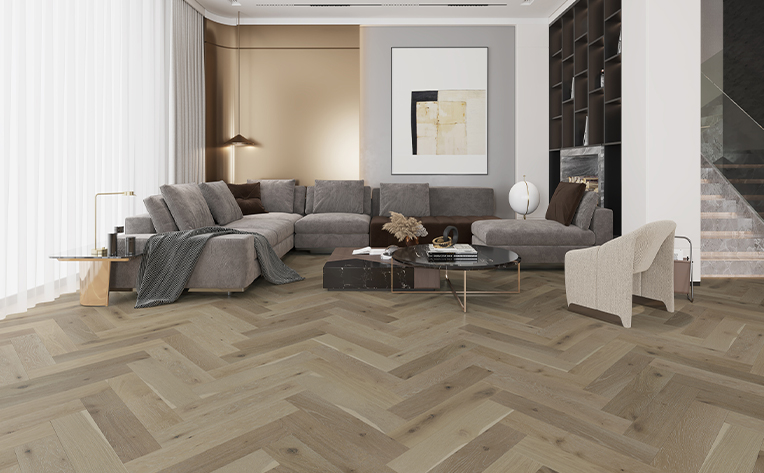
What Is Herringbone Flooring?
Herringbone flooring is made from rectangular pieces of wood, tile, or vinyl set at a 90 degree angle to one another. Each piece interlocks with the next, forming a broken zigzag that looks a bit like the bones of a herring fish, which is where the pattern gets its name. The result is a floor with real movement and texture, one that catches the eye without feeling busy.
The pattern traces back to ancient Rome, where it was used in road construction because the interlocking shape held up so well under pressure. That same structural logic is part of why herringbone still works so beautifully today, whether it's underfoot, on a wall, or even overhead.
This construction also makes herringbone incredibly versatile. It shows up in solid hardwood, engineered wood, ceramic tile, porcelain, and luxury vinyl, so you can bring the look into just about any room.
Herringbone vs. Chevron
Herringbone often gets compared to chevron, another zigzag pattern with a similar reputation for elegance. The two look related from a distance, but they're built differently, and that difference matters when you're planning a space.
Herringbone pieces are rectangular and meet at a 90 degree angle, creating a broken, staggered zigzag with a bit of texture and irregularity built in. Chevron pieces are cut at a 45 degree angle on each end, so they meet in a continuous point and form a sharper, more uniform V shape.
Herringbone tends to bring warmth and a lived-in character that works well in traditional or transitional spaces. Chevron leans sleeker and more graphic, which can suit a modern or minimalist room.
Where and How Herringbone Works Best
Herringbone works in more places than you might think because it isn't tied to one material. Here's a closer look at where it shines.
- Hardwood. This is the classic choice for herringbone, especially in living rooms, dining rooms, and entryways. It brings warmth and a sense of craftsmanship that pairs well with traditional, farmhouse, and transitional styles.
- Tile. Porcelain and ceramic herringbone hold up well in bathrooms, kitchens, and mudrooms where moisture and heavy foot traffic are a factor. Tile also gives you more flexibility with color and finish, so it works in both minimalist and more decorative spaces.
- Luxury vinyl. If you love the look of wood but need something more resistant to water and wear, luxury vinyl herringbone is worth a look. It holds up well in kitchens, basements, and family spaces, and it tends to be a more budget-friendly way to get the pattern throughout a larger area.
Room by Room: Where Herringbone Shines
- Entryways and hallways are a natural home for herringbone since the pattern's movement draws the eye forward and can make a narrow space feel wider.
- Kitchens and bathrooms benefit from herringbone as a backsplash or accent, adding texture without overwhelming the room.
- Living rooms and bedrooms work well with a full herringbone floor, especially in homes with a traditional or transitional style.
Herringbone tends to look most at home in traditional, farmhouse, and transitional interiors, where its texture and warmth complement other classic details. That said, a herringbone floor in a lighter wood tone or a matte tile can just as easily fit a modern or minimalist space, especially when paired with clean lines and a simpler color palette elsewhere in the room.
Where Herringbone Works Beyond the Floor
Herringbone isn't limited to what's underfoot. On walls, it makes a striking backsplash or accent feature, especially in kitchens and bathrooms where a bit of texture goes a long way. Because the pattern creates strong directional lines, it can also make a narrow entryway or a small bathroom feel more open than it is.
Ceilings are where herringbone gets a little unexpected. Applied overhead, the pattern catches light differently than a flat surface would, adding depth and a bit of drama to a room without requiring a full renovation. It's a smaller commitment than a full floor, which makes it a nice way to experiment with the look before deciding whether to bring it into a bigger space.
Design Tips and Tricks
A few things to keep in mind as you plan:
- Match the scale to the room. Smaller herringbone pieces tend to look more balanced in cozy spaces, while larger pieces have room to breathe in bigger, more open areas.
- Think about material. Hardwood brings warmth, tile brings durability in wet spaces, and luxury vinyl offers a budget-friendly way to get the look with easier upkeep. Each one is suited to a different part of your home.
- Use light to your advantage. On ceilings especially, the shadows cast by a herringbone pattern can add real depth to a room, so it's worth thinking about where your light sources sit before you commit to a layout.
- Don't be afraid to mix scale. Combining a smaller herringbone detail, like a backsplash, with a larger herringbone floor in the same home can tie a design together without feeling repetitive.
Ready to Bring Herringbone Home?
Herringbone has held its place in design for centuries because it brings texture, movement, and a sense of craftsmanship to a space, whether that space is a grand living room or a small powder bath.
If you're ready to see what it could look like in your own home, we're here to help. Our team can walk you through material options, help you figure out where herringbone makes the most sense for your space, and get you started with a plan that fits your style and your budget. Don't wait to contact us and find the perfect option for your home today.
Frequently Asked Questions
What is herringbone flooring?
Herringbone flooring is a pattern made from rectangular pieces of wood, tile, or vinyl set at a 90 degree angle to one another. The pieces interlock to form a broken zigzag that resembles the bones of a herring fish, which is where the name comes from.
What's the difference between herringbone and chevron?
Herringbone pieces are rectangular and meet at a 90 degree angle, creating a staggered, textured zigzag. Chevron pieces are cut at a 45 degree angle on each end and meet in a continuous point, creating a sharper, more uniform V shape.
Is herringbone flooring hard to install?
Herringbone takes more precision than a standard straight-plank installation because each piece has to line up at a consistent angle. It's a good idea to work with an experienced installer to make sure the pattern stays even from wall to wall.
What material is best for herringbone flooring?
It depends on the room. Hardwood is a great fit for living rooms and entryways, tile holds up well in wet spaces like bathrooms and kitchens, and luxury vinyl offers a durable, budget-friendly option for high-traffic areas.
Can herringbone work in a small room?
Yes. In fact, herringbone can make a small room feel larger. The pattern's diagonal movement draws the eye across the space, which can create the impression of added width or length.